How Digital Tools and AI Can Help Solve Real Problems in Moroccan Education
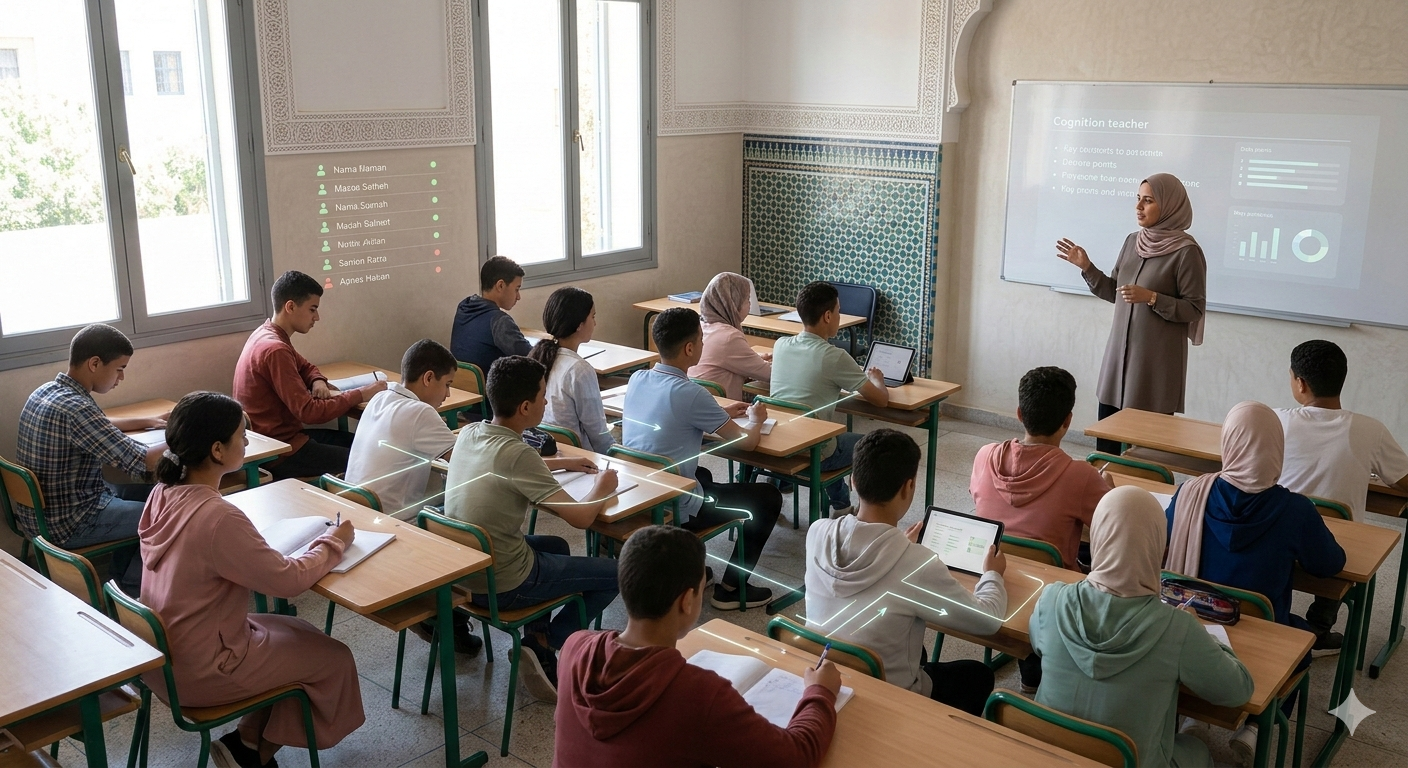
Generated by AI. We’re working to make it real.
For the past months, much of our work has been focused on e-commerce and digital operations, but we have deliberately started shifting part of our attention towards areas that can create deeper, long term impact for Morocco. Areas that contribute not only to efficiency, but to the country’s long term strength and resilience..
Education is one of them.
With all the current macroeconomic and political discussions, one of the questions that can rise is: can Morocco really strengthen its educational system using digital tools that are built in the US, the UK, or Europe?
The answer for us is yes.
Because strength does not come from building everything from scratch. It comes from how intelligently a country uses global tools to serve local priorities.
Technology is a tool. Ownership comes from the strategy behind it.
And right now, Moroccan education faces very real operational challenges that digital tools and AI can help address in practical, immediate ways.
And the question we need to ask: are we ready for the next pandemic?
The Problem Is Not Talent
Morocco does not lack talent. It lacks visibility, coordination, and operational clarity across the system.
The story repeats in other places, but it’s worth bringing them to this context:
School leaders are overwhelmed
Teachers are overstretched
Data exists but is fragmented
Support systems are reactive instead of proactive
Many decisions are still based on intuition rather than evidence because the system does not make insight easily accessible.
This is where digital tools can make a difference by strengthening their ability to act early and effectively.
Where Digital Tools Can Make Immediate Impact
1. Early Identification of Learning Gaps
Today, struggling students are often identified too late.
AI powered dashboards can consolidate assessment results, attendance, behaviour patterns and progress into simple visual insights.
Instead of waiting for exam failure, schools can spot:
Students drifting off pace
Patterns across classes
Subjects where support is needed
This enables early intervention rather than late correction.
2. Supporting Teachers Without Increasing Workload
Teachers in Morocco already carry a significant administrative burden.
Digital platforms can:
Automate reporting
Simplify progress tracking
Generate individual learning summaries
AI can assist in preparing differentiated materials or suggesting support strategies based on student profiles. It gives teachers more time to teach.
3. Operational Clarity for School Leadership
Many school leaders operate without real time visibility.
Digital management platforms can provide:
Daily attendance trends
Performance insights
Wellbeing signals
Resource allocation data
Instead of preparing for inspections as a separate exercise, schools become inspection ready at all times because their systems are structured and transparent.
This shifts leadership from firefighting to planning.
4. Bridging Language and Learning Gaps
Morocco’s multilingual reality is both a strength and a challenge.
AI can support:
Translation of materials
Adaptation of learning content
Language accessible instructions
Students can engage with knowledge without being blocked by language barriers.
5. Supporting Student Wellbeing
Academic success cannot be separated from mental wellbeing.
Digital tools can help schools track:
Engagement levels
Behavioural patterns
Attendance fluctuations
These signals often reveal deeper issues early.
AI can highlight patterns that human teams might miss in large student populations. This allows support teams to act before problems escalate.
Smart Use of Global Tools
Using AI does not mean surrendering control.
Morocco does not need to build foundational AI models from zero to benefit from them.
Just as the country uses global infrastructure for trade, finance, and logistics, it can use global digital infrastructure to strengthen its human capital.
What matters is:
Local implementation
Local data governance
Local priorities
When Moroccan educators and institutions shape how these tools are used, the value remains within the system. The goal is capability.
A Practical Path Forward
This transformation does not require massive national reform to begin.
It can start with:
Pilot dashboards
Simple digital progress tools
AI assisted support systems
Operational platforms for school leaders
Built step by step. Focused on clarity, not complexity.
Education Is Infrastructure
When we talk about infrastructure, we often think of roads, ports, or energy. But education is infrastructure too. It shapes the country’s future workforce, leadership, innovation capacity, and social stability.
Digital tools and AI can help Morocco move from reactive systems to proactive ones. From fragmented information to shared clarity. From late intervention to early support.
And in doing so, strengthen not only schools, but the country itself.
We’re truly excited about what is ahead of us and ahead of Morocco. And we want to help build the tools and shape a better future for the country.