
DGI e-invoicing is here.
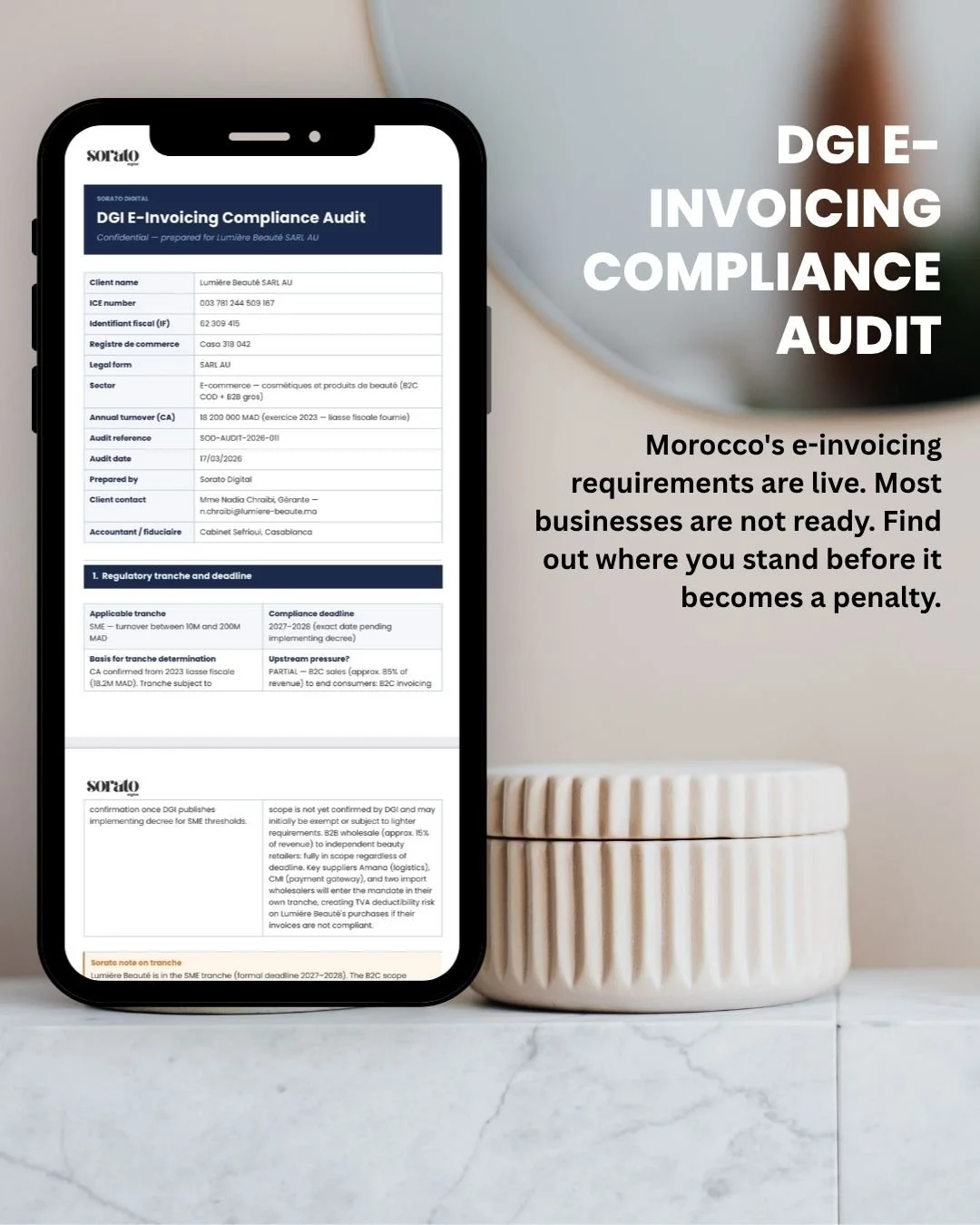
Before you implement anything, you need to know where you actually stand.
A compliance audit is the first step that makes every other step cheaper, faster, and less likely to fail.
What is changing
Morocco has adopted the Clearance model for electronic invoicing. Every B2B invoice must be transmitted to the DGI platform, validated in real time, and assigned a unique identifier before it reaches your client. A PDF sent by email, even with an electronic signature, does not qualify.
The mandatory format is UBL 2.1. Each invoice must include your client's ICE number, a certified electronic signature, and be held in archive for a minimum of ten years. The rollout is progressive: large companies first, smaller businesses on a staggered schedule.
That schedule has led most businesses to wait. It is also why the businesses that are preparing now will have a significant advantage over those that are not.
Still have doubts about the DGI mandate? Check our blog post here.
Why the audit is the right first move
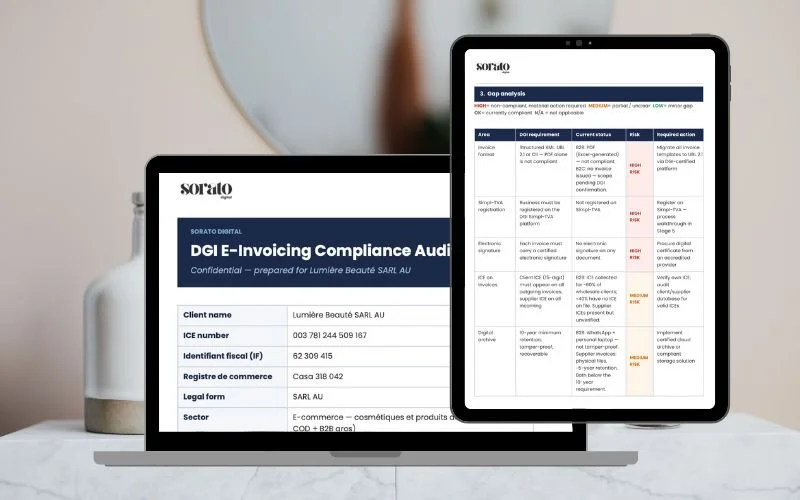
There is no shortage of certified platforms to connect to. The problem is that most businesses that go straight to implementation discover the same thing partway through: their data is not ready, their processes are not aligned, and the work they assumed was simple turns out to require more time than they had.
This is made more complex by the fact that while the core framework is defined, some technical requirements are still being finalised by the DGI. The sooner you have a clear picture of your current setup, the better positioned you will be to adapt as those details are confirmed.
An audit changes that. Before you commit to a platform, before you brief an implementation partner, before you start reconfiguring anything, you need a clear picture of where your current setup stands against what the DGI already requires, and what it is likely to require next.
That picture does not take long to produce. What it prevents is significantly longer.
What the audit uncovers
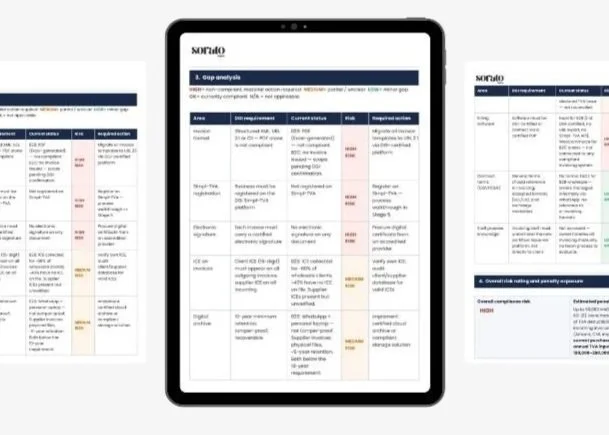
The gaps that delay most compliance projects are not technical. They are operational, and they are consistent.
Incomplete or unverified ICE numbers across your B2B client base. Invoice data that does not map cleanly to the UBL 2.1 structure. Platform configurations that need updating before any DGI connection is possible. Internal processes that will break under the new system if they are not adjusted first.
None of this is visible until someone looks for it. That is what the audit is for.
What happens without it
Businesses that skip the audit and go straight to implementation tend to encounter the same pattern: an implementation that stalls, a timeline that extends, and costs that were not in the original plan. Not because the platform failed, but because the groundwork was not there.
What We Do
We review your current invoicing setup, platform configuration, data quality, and B2B client records. You receive a gap assessment mapped against DGI requirements and a clear action list: what is ready, what is not, and what needs to happen before implementation makes sense.
From there, we recommend the certified platform that fits your volume and operational context, and connect you with the right partner to implement it. If operational preparation is needed first (ICE data cleaning, process updates, team briefing) we handle that too.
The audit is the starting point. Everything else follows from it.
Here is what that looks like in practice.
Compliance audit
We review your current invoicing setup, platform configuration, data quality, and B2B client records. We map the gap between where you are and where the DGI requires you to be, and give you a clear picture of what needs to happen before you are ready to connect.
Platform recommendation
Not all certified platforms are right for every business. Based on your volume, platform, and operational context, we recommend the solution that fits your situation and connect you with the right partner to implement it.
Operational preparation
We help you prepare the groundwork that makes implementation smooth: cleaning client ICE data, updating invoicing processes, and ensuring your team understands what changes with the new system.
Who This Is For
Moroccan businesses operating at volume or with B2B clients. Merchants on Shopify, YouCan, WooCommerce, or any platform not yet connected to the DGI Simpl-TVA infrastructure. Any business that wants to approach this methodically rather than under pressure.
Why now
The pilot phase began in October 2025. Large companies are already in mandatory scope, and as they implement their own compliance, they are reviewing who they buy from. An uncertified supplier creates a VAT deductibility problem on their end. They will not always explain that to you.
You do not need your own deadline to have a reason to act. The decisions that affect your pipeline are already being made.
We are actively tracking the DGI's evolving specifications, both operational and technical, so that our clients are not caught off guard as requirements are confirmed. This is not a one-time assessment. We are partners in the process.