Renting in Morocco as a Foreigner: A Practical Housing Guide
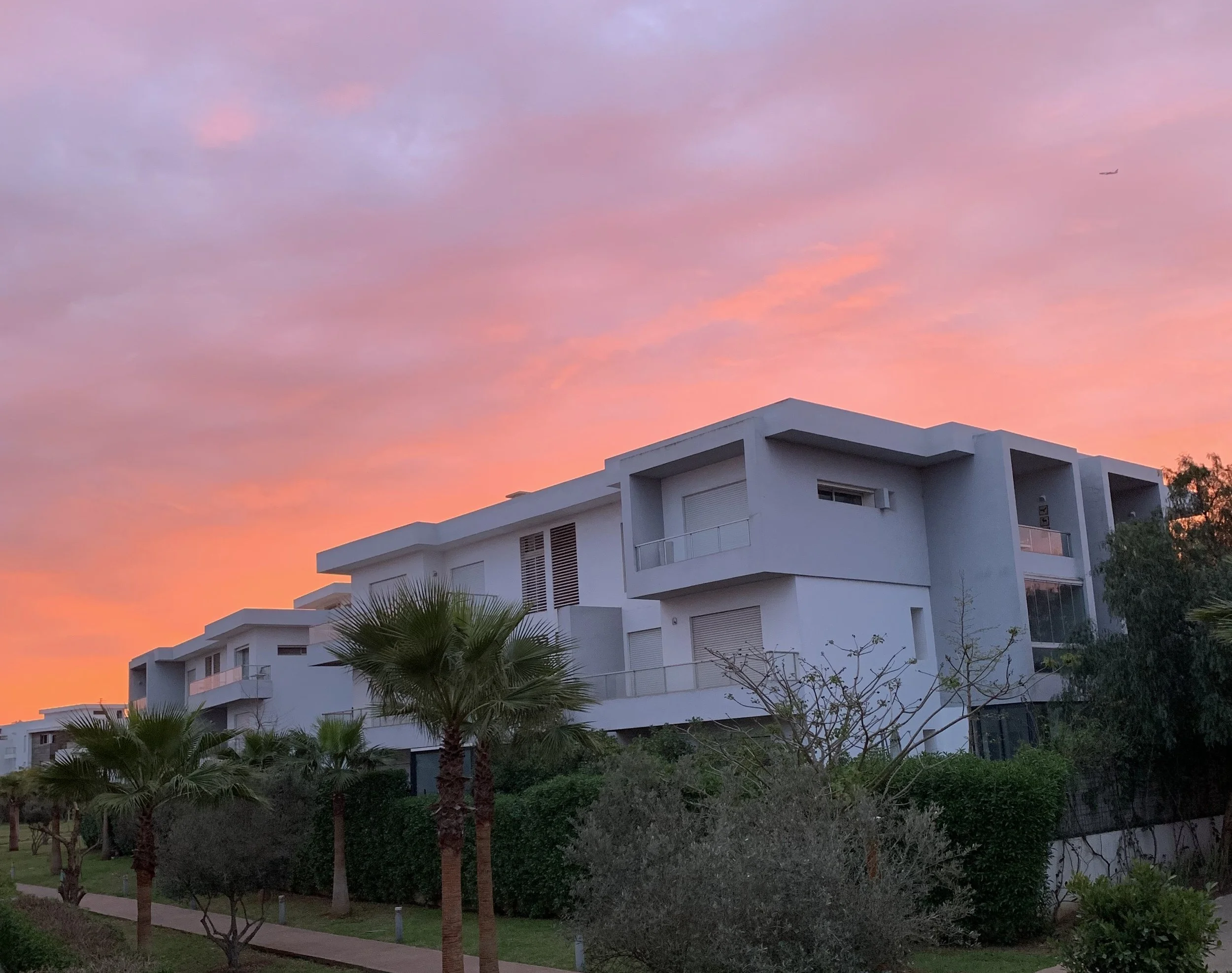
Sunrise in Bouskoura, Personal Archive
Finding a home is an important part of settling into Morocco, whether you are moving with children, planning to retire by the coast, working remotely or coming to study for a year or two. The rental market in Morocco is approachable once you understand the local landscape, and with the right information you can secure a suitable property without unnecessary stress.
How Rentals Are Found in Morocco
Rental properties in Morocco are found through several channels, and it often works best to use more than one. Online platforms have improved in recent years, but searching on the ground still produces the best results.
Online platforms and real estate agencies are useful for understanding typical price ranges and neighbourhoods, especially for larger apartments and villas that may suit families or retirees.
Many rentals are advertised with small signs at the entrance of buildings. Exploring neighbourhoods in person also allows you to observe cafés, shops, transport and daily life which may matter if you are a remote worker or student.
Samsars are local intermediaries and they rely on neighbourhood networks and often know about properties before they are listed. Their services are common. If you decide to work with one, it is sensible to agree to a fee in advance.
Families often hear about homes through schools, remote workers through coworking spaces and students through university groups. These informal networks help newcomers find housing that suits their lifestyle.
Neighbourhoods That Often Appeal to Different Lifestyles
Moroccan cities offer diverse residential environments. The examples below reflect where different types of residents commonly choose to live, along with a selection of real estate agencies that operate in those markets and assist with rentals. This information is intended only as a reference and starting point for research, since each relocation situation is different and preferences vary widely.
Casablanca
Casablanca offers coastal districts, modern residential areas and business centres. Families often look at Ain Diab, Anfa, Racine or CIL, remote workers may prefer Gauthier or Maarif for cafés and services, retirees sometimes choose Bouskoura for greenery, and students often rent in Maarif or Belvedere near transport and universities.
Real estate agencies active in Casablanca include CGI Immobilier, Kettani Immobilier, as well as international-facing agencies such as Chestertons Morocco and Feel Home Morocco that regularly work with foreign residents.
Rabat
Rabat has a calmer pace, diplomatic districts and established suburbs. Families commonly choose Hay Riad, Agdal or Souissi, remote workers often prefer Agdal or Hassan, retirees may enjoy Hassan or Oudaya near cultural sites and the coastline, and students frequently cluster around Agdal near universities and transport.
Local agencies handling rentals in Rabat include Rabat Immobilier, along with international-oriented agencies such as Chestertons Morocco that also operate in the capital.
Marrakech
Marrakech blends historic areas with modern districts and suburban villa communities. Families often consider Targa or Gueliz, remote workers may favour Gueliz for cafés and coworking, retirees sometimes settle in Palmeraie or golf developments with quieter surroundings, and students often share accommodation in Gueliz or near university zones.
Agencies assisting with rentals in Marrakech include M2Morocco Real Estate, Bosworth Property Marrakech, Kensington Morocco, Marrakech Realty, and Home Sweet Home Marrakech, which are accustomed to working with domestic and foreign clients.
Agadir
Agadir offers coastal living, modern infrastructure and a slower pace. Families frequently look at Founty or Hay Mohammadi, remote workers and retirees often choose coastal neighbourhoods for quiet walks and proximity to cafés, and students commonly live near Ibn Zohr University or in central districts.
Real estate agencies active in Agadir include Agadir Immobilier, Prestige Immo Agadir, and Sahara Immo, which handle furnished and unfurnished long-term rentals.
Tangier
Tangier mixes Mediterranean coastal living with a growing international scene. Families tend to explore Iberia, Malabata or California, remote workers may choose central districts for cafés and services, retirees often enjoy Malabata along the seafront, and students may choose Marshan or areas close to universities and public transport.
Agencies commonly used in Tangier include Mubawab, and Elite Immobilier all active in the rental market.
How to Verify If an Agency Is Reputable
Since Morocco does not have a unified national registry for residential real estate agents, it is wise to verify agency credibility through a combination of checks:
Business presence and consistency: Established agencies usually have an office, a website, updated listings and identifiable staff.
Responsiveness and communication: Reputable agencies respond clearly, provide full addresses, and do not pressure clients into decisions.
Local registration and documentation: Ask whether the agency is formally registered as a business. Most legitimate agencies can provide their company name, tax number or commercial registration.
Client references or reviews: Search for reviews in relocation groups or ask for past client references.
Clear fee structure: A reputable agency will state fees before showing properties. In Morocco, fees often equate to one month of rent, but the agency should confirm this upfront.
Contract transparency: Agencies should provide full copies of documents before signing and should not ask for cash payments without receipts.
Simple steps like these help ensure that you are dealing with a legitimate intermediary rather than an informal broker who may not follow through.
Reference Note
The agencies and neighbourhood examples above are provided for informational reference only. They do not represent endorsements or recommendations. Housing preferences change based on budget, work needs, family situation, mobility, health considerations, and personal comfort. Newcomers are encouraged to use multiple sources of information, consult local contacts and rely on formal documentation when signing any rental agreement.
How Rental Contracts Work in Morocco
Once you find a property, the rental agreement known as a contrat de bail will formalise the terms. Morocco does not have a single standardised contract template for residential rentals at the national level. In practice, a written agreement drafted by the landlord, agent or tenant can be used as long as both parties agree to the terms.
Contracts are usually written in French or Arabic. If you do not speak either language fluently, consider having the terms explained before signing.
Typical clauses cover:
Rent amount and method of payment
Duration of the lease
Security deposit and conditions for return
Repair and maintenance responsibilities
Notice periods for both tenant and landlord
Registration and Notarisation
There is currently no single national system that mandates or standardises the registration of private residential leases. Some communes or arrondissements may accept leases for administrative purposes, and landlords may declare rental income for tax reasons. Procedures vary significantly between locations and are not uniformly enforced.
Notarising the contract is optional but widely recommended. A notarised lease provides legal authentication of the document and signatures. This can be helpful if you need to prove your address, if a disagreement arises or if you require supporting documentation for administrative processes. Notarisation strengthens the legal clarity of a contract in a system that does not rely on a unified national tenancy registry.
Deposits, Payments and Required Documents
A security deposit equal to one or two months of rent is standard. The first month might be requested in advance. Receipts should be provided for all payments.
Landlords commonly request:
Passport
Proof of income or employment
Moroccan mobile number
A residency card is beneficial for some processes but is usually not required to sign a lease.
Agents, Samsars and Fees
Real estate agencies and samsars may charge a finder fee, often equal to one month of rent. This varies by city and property type. Clarifying fees before viewing properties avoids confusion later.
Negotiating Terms
Negotiation is part of the rental process in Morocco. A longer lease, reliable income or willingness to pay quarterly can sometimes lead to better terms. For example, families enrolling children in local schools may negotiate stability, retirees may negotiate for longer terms and students may inquire about furnished rentals.
Common Mistakes to Avoid
The following issues are common among newcomers:
Agreeing verbally without a written contract.
Paying deposits before inspecting the property.
Not clarifying maintenance responsibilities.
Failing to record meter readings for electricity and water.
Assuming the process mirrors their home country.
Being aware of these points makes renting more straightforward.
Preparing Before You Start Searching
It helps to organise the following:
Clear monthly budget for rent and utilities
Shortlist of neighbourhoods that suit your lifestyle
Consideration of schools if you have children
Awareness of coworking spaces if you work remotely
Proximity to universities if you are a student
Access to healthcare if you are retired
Understanding of public transport
This preparation speeds up decision making once viewings begin.
Key Questions for Landlords and Agents
During viewings, ask:
Who pays for plumbing and electrical repairs
How the deposit will be returned and under what conditions
Whether utilities are connected or need to be set up
What typical monthly utility costs are in that building or area
How rent payments are made and on which date
What notice period applies
Whether pets are permitted if relevant
Clear answers prevent confusion later.
Understanding the Real Cost of Living
Rent is only part of the housing cost. Utilities such as electricity, water, gas and internet vary by region, season and building type. For example:
Students may share apartments to divide utility costs
Remote workers may factor in high speed internet and coworking fees
Families may include school transport in their budget
Retirees may consider proximity to clinics or pharmacies
Including these items in a monthly budget helps avoid surprises during the first months in the country.
Our Last Thoughts
Renting in Morocco is manageable once you understand how the market works. Whether you are a family seeking space and schools, a remote professional seeking cafés and connectivity, a retiree looking for coastal calm or a student seeking convenience, most Moroccan cities offer suitable options.
With preparation, written agreements and clear communication, finding a home becomes a positive part of settling into life in Morocco.